
Defining zero-knowledge hubs 2026
In 2026, the term "zero-knowledge hub" refers to specialized Layer 2 (L2) blockchains optimized for privacy-preserving credential verification rather than general transaction throughput. While generic L2s focus on scaling payment or smart contract execution, these hubs function as coordination layers for identity and sensitive data. They enable users to prove attributes—such as age, residency, or compliance status—without exposing the underlying personal information on the public ledger.
This distinction is critical for legal and regulatory frameworks. Traditional L2s often replicate the transparency of the base layer, which can conflict with data protection laws like the EU’s GDPR. Zero-knowledge hubs decouple verification from visibility. By generating cryptographic proofs that validate data integrity without revealing the data itself, they allow institutions to audit compliance while preserving user privacy. This architecture supports use cases in regulated finance, healthcare data sharing, and government-issued digital IDs, where the burden of proof must not become a burden on privacy.
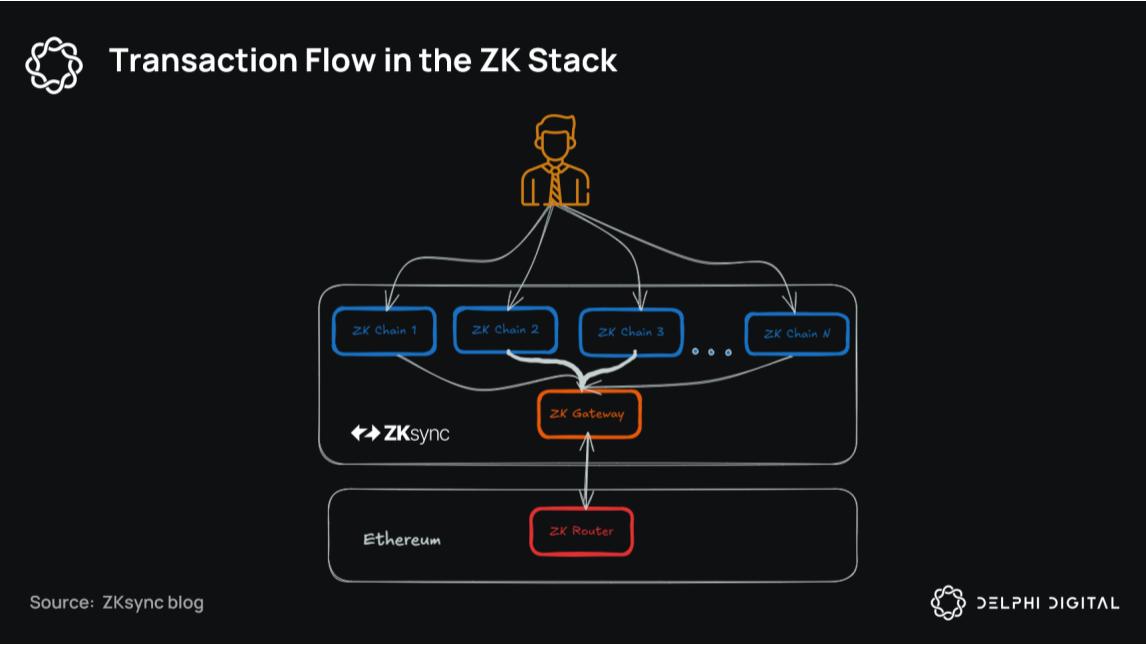
The operational model relies on a hub-and-spoke topology. Applications (spokes) submit zero-knowledge proofs to the hub, which verifies them efficiently before settling the final state on the base blockchain. This structure reduces computational overhead for complex identity logic. For example, a DeFi protocol can verify that a user is not on a sanctions list without storing their passport number or transaction history. The hub manages the cryptographic state of these identities, ensuring that only authorized parties can access the decrypted credentials.
As of 2026, this infrastructure is being integrated into pilot programs by regulatory bodies seeking to balance transparency with privacy. The European Union’s Horizon Europe program has funded research into such privacy-preserving coordination layers, recognizing their potential to support secure, compliant digital interactions across borders. These hubs are not merely technical upgrades; they represent a structural shift in how digital identity is managed, moving from centralized databases to decentralized, cryptographically verified networks.
Comparing Leading ZK Stack Architectures
Evaluating zero-knowledge (ZK) infrastructure requires distinguishing between the underlying proof systems and their operational compatibility with existing legal and technical frameworks. For identity applications and hub-like infrastructure, the choice of stack dictates both computational efficiency and regulatory interoperability. This section compares the dominant ZK rollup providers—Polygon zkEVM, zkSync, Scroll, and Linea—focusing on their proof types, EVM equivalence, and maturity in supporting identity use cases as of early 2026.
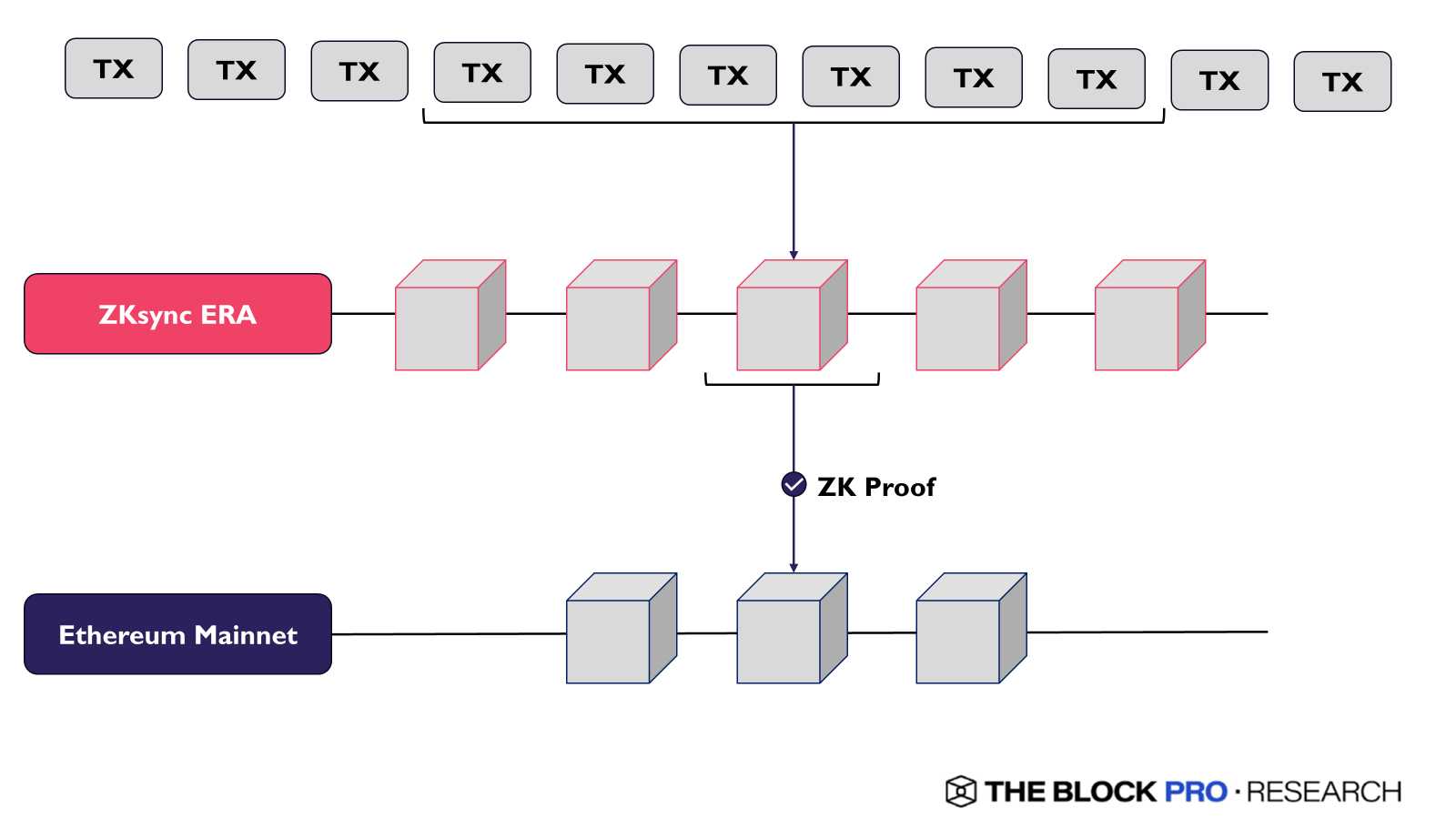
The primary technical divergence lies in the proof system: SNARKs (Succinct Non-Interactive Arguments of Knowledge) versus STARKs (Scalable Transparent Arguments of Knowledge). SNARKs offer smaller proof sizes and faster verification, which is advantageous for high-frequency identity verifications where latency matters. STARKs provide quantum-resistant security and transparency without a trusted setup, appealing to institutions prioritizing long-term cryptographic resilience. Additionally, EVM (Ethereum Virtual Machine) equivalence determines how easily existing smart contracts and compliance tools can be ported to the ZK layer.
The following table summarizes the core architectural differences relevant to infrastructure deployment.
| Stack | Proof Type | EVM Equivalence | Identity Support Maturity |
|---|---|---|---|
| Polygon zkEVM | SNARK | Full | High |
| zkSync | STARK | EVM Equivalent | Medium |
| Scroll | SNARK | Full | Medium |
| Linea | SNARK | Full | Low |
Privacy and compliance in 2026 regulations
The regulatory landscape for zero-knowledge infrastructure has shifted from theoretical debate to operational mandate in 2026. For ZK rollup providers, the primary challenge is no longer just proving computational correctness, but demonstrating that the privacy guarantees align with evolving data protection laws. In the European Union, the General Data Protection Regulation (GDPR) remains the baseline, but its interpretation of "right to be forgotten" now intersects directly with immutable blockchain ledgers. ZK proofs offer a technical solution: by keeping transaction data off-chain and only publishing cryptographic commitments on-chain, operators can satisfy transparency requirements without storing personal identifiable information (PII) in a way that violates data minimization principles.
In the United States, the regulatory focus has narrowed around the Financial Crimes Enforcement Network (FinCEN) and state-level digital asset frameworks. The 2026 compliance environment demands that ZK hubs support selective disclosure. This means the infrastructure must allow users to prove they meet specific criteria (such as being a non-sanctioned entity or over a certain age) without revealing their full identity history to the public ledger. This capability is essential for institutions navigating the anti-money laundering (AML) directives that now explicitly recognize zero-knowledge technology as a valid compliance tool, provided the underlying circuit logic is auditable.
The European Market Infrastructure Regulation (MiCA), fully enforced by 2026, introduces specific requirements for asset-referenced tokens and e-money tokens. These regulations require issuers to maintain clear records of token holders while respecting privacy. ZK rollups facilitate this by enabling "privacy-preserving audits." Regulators can request a proof that verifies the issuer’s compliance with reserve requirements or transaction monitoring standards without accessing the raw data of every individual user. This separation of public verification and private data storage is becoming the standard architecture for compliant ZK hubs.
Digital identity standards are also converging with ZK infrastructure. The European Digital Identity (EUDI) wallet framework, operational in 2026, relies heavily on verifiable credentials. ZK proofs allow users to interact with these wallets by proving attributes (e.g., residency, age) without exposing the underlying certificate. For infrastructure providers, this means building circuits that are compatible with the EUDI reference architecture. The ability to issue and verify these credentials efficiently is now a key differentiator for ZK hub operators seeking to integrate with public sector services.
Selecting infrastructure for identity use cases
Developers and enterprises must align ZK hub selection with specific identity requirements, such as proof-of-humanity verification or secure credential issuance. The choice of infrastructure dictates how well the system handles regulatory compliance and data minimization principles. This section outlines the decision process for deploying ZK hubs in identity-centric applications.
Identify whether the use case requires simple attribute verification (e.g., age > 18) or complex proof-of-personhood. Proof-of-humanity applications often demand higher entropy and resistance to Sybil attacks, influencing the choice of circuit complexity and proving system. Credential issuance typically requires standard-compliant outputs, such as W3C Verifiable Credentials, to ensure interoperability with existing identity wallets.

Assess the hub’s ability to perform zero-knowledge proofs without exposing underlying personal data. The infrastructure must support selective disclosure, allowing users to prove attributes without revealing the full dataset. This capability is critical for compliance with data protection regulations, ensuring that only necessary information is shared during verification processes.
Confirm that the ZK hub’s architecture supports compliance with relevant legal frameworks. In the European Union, the General Data Protection Regulation (GDPR) requires strict controls over personal data processing. Infrastructure must enable audit trails and data deletion mechanisms that are compatible with immutable blockchain ledgers, often through off-chain storage solutions or zero-knowledge proofs of compliance.
Measure the proving time and verification cost under expected load. Identity applications often involve high-frequency transactions, such as login verifications or micro-transactions. The selected ZK hub must demonstrate low-latency proof generation and on-chain verification costs that are sustainable for mass adoption, particularly in proof-of-humanity scenarios where user volume can be large.

Review the cryptographic primitives and key management schemes employed by the hub. Secure identity systems require robust key generation, storage, and rotation mechanisms. Ensure that the infrastructure supports multi-party computation (MPC) or threshold signatures if distributed trust is required, minimizing the risk of single points of failure in identity credential management.
-
Security audits completed for circuit logic and key management
-
Compliance verification against GDPR or local jurisdictional requirements
-
Scalability testing under peak identity verification loads
-
Interoperability checks with target W3C Verifiable Credential standards
-
User privacy impact assessment documented and approved
The selection process requires balancing technical performance with legal obligations. By following these steps, organizations can deploy ZK hubs that meet both functional identity needs and regulatory standards.
No comments yet. Be the first to share your thoughts!