
Defining ZK Hubs in modern crypto
A ZK Hub is infrastructure that uses zero-knowledge proofs to verify identity and data without revealing the underlying information. It sits at the intersection of cryptographic verification and decentralized identity, allowing users to prove they meet certain criteria—such as being over a specific age, holding valid credentials, or possessing sufficient funds—without exposing the raw data itself.
The term "Hub" carries a dual meaning here. Technically, it refers to the processing layer where complex proof generation and verification occur, often acting as a bridge between on-chain state and off-chain computation. Simultaneously, it represents a community gathering point where developers, identity providers, and users converge to establish standards for privacy-preserving interactions. This distinction separates ZK Hubs from generic rollups, which primarily focus on scaling transaction throughput rather than managing identity and selective disclosure.
Unlike traditional identity systems that require sharing personal details with every service, ZK Hubs enable a "need-to-know" basis for data exchange. This architecture supports scalable, private transactions by keeping sensitive information local to the user while still providing the cryptographic guarantees necessary for trustless verification. The result is a system that prioritizes user sovereignty over data, reducing the attack surface for privacy breaches while maintaining the integrity of the broader network.
How ZK Hubs solve the scalability trilemma
The scalability trilemma in blockchain describes the difficulty of maintaining decentralization, security, and speed simultaneously. ZK Hubs address this tension by moving the heavy lifting of transaction verification off the main chain. They act as a processing layer that aggregates user activity and compresses it into a single, compact proof.
Instead of every individual transaction competing for block space on the mainnet, ZK Hubs batch thousands of operations together. They then generate a zero-knowledge proof (ZKP) that mathematically confirms the validity of the entire batch. This proof is submitted to the main chain for final settlement.
This mechanism drastically reduces the data load on the base layer. The mainnet only needs to verify the single proof rather than re-executing every transaction. This preserves security and decentralization while allowing the system to handle far more throughput than traditional models.
Technically, this infrastructure consolidates and routes data efficiently. Socially, it also represents the community gathering point where developers and users converge to build on these privacy-preserving protocols.

ZK identity and privacy-preserving credentials
Zero-knowledge proofs allow users to verify specific attributes without revealing the underlying data. In the context of ZK identity, this means proving you meet a requirement—such as being over 18 or holding a specific credential—without exposing your full name, date of birth, or transaction history. This capability shifts digital identity from a model of total exposure to one of selective disclosure.
The "Hub" in ZK Hub serves two purposes. Technically, it provides the infrastructure for generating and verifying these proofs. Socially, it acts as a gathering point for developers and communities building privacy-preserving tools. Together, they create an ecosystem where identity is verified cryptographically rather than through centralized databases that store sensitive personal information.
This approach solves the privacy paradox in digital identity. Traditional systems require you to hand over all your data to prove a single fact. ZK identity systems let you keep your data private while still satisfying the verifier's needs. This is particularly valuable for applications ranging from age verification in online services to proving residency without revealing your exact address.
Community hubs and developer ecosystems
Beyond the technical infrastructure of nodes and verifiers, ZK Hubs refer to the human networks that drive education and standardization. These community hubs act as gathering points where developers, researchers, and projects converge to share progress and align on best practices.
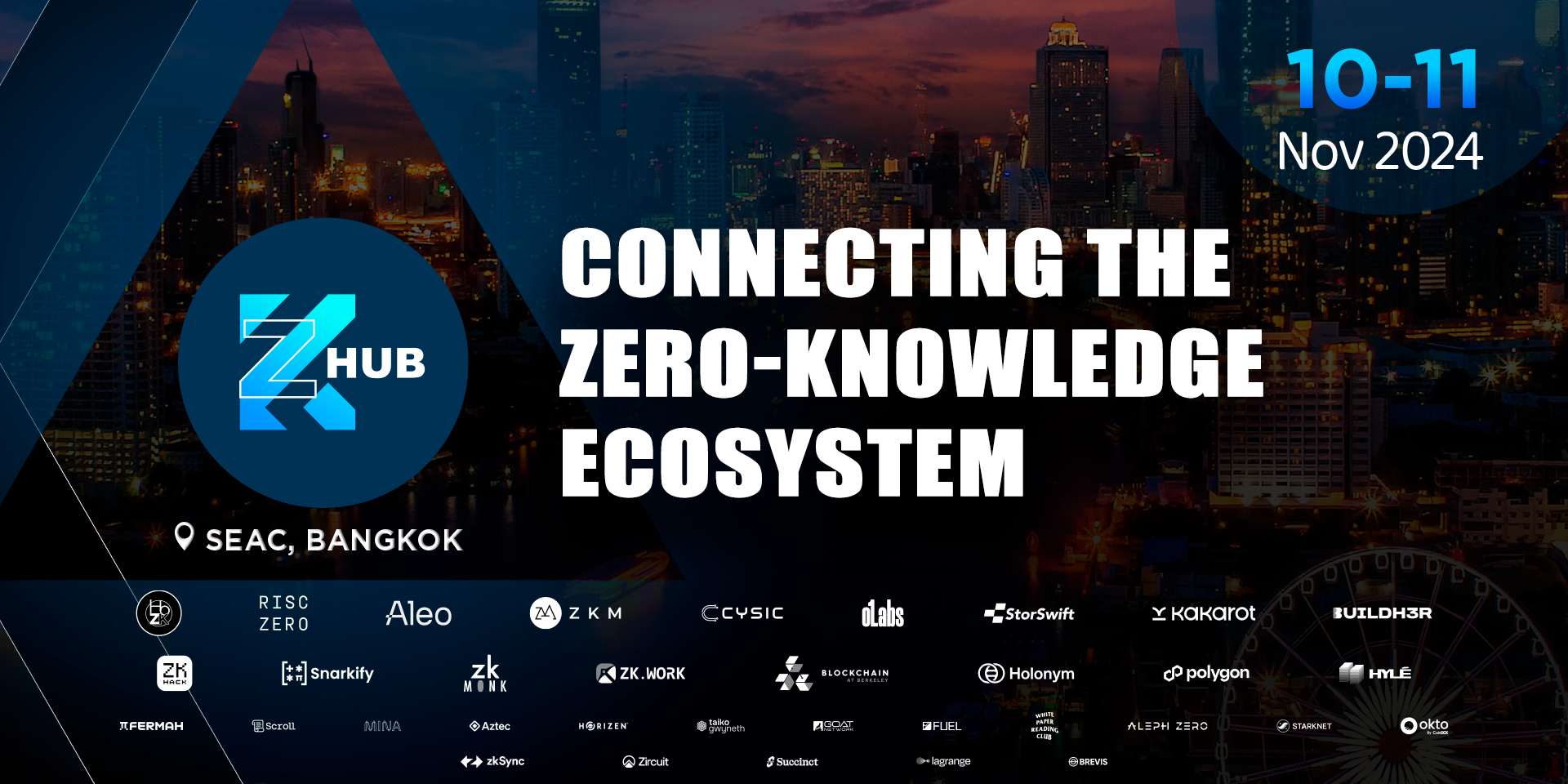
Events like House of ZK’s ZK Hub at ETHDenver serve as prime examples. Billed as the official ZK event for the festival, these gatherings bring together innovators to educate attendees and network. They function as the social layer of the ecosystem, ensuring that technical advancements in privacy-preserving identity are understood and adopted widely.
This organizational aspect is critical for a field as complex as zero-knowledge proofs. Without these community anchors, the landscape would remain fragmented. By fostering collaboration, hubs help standardize protocols and accelerate the development of practical applications.
Frequently asked questions about ZK Hubs
Common misconceptions about zero-knowledge proofs
Zero-knowledge proofs (ZKPs) are powerful cryptographic tools, but they are not a silver bullet for every privacy challenge. A common misunderstanding is that ZKPs automatically make all data anonymous. In reality, they allow you to prove you know a secret without revealing the secret itself. This means you can verify eligibility for a service or prove you are over 18 without disclosing your actual birthdate or identity document. The privacy benefit comes from the verification process, not from erasing your digital footprint entirely.
Another frequent confusion lies in the terminology. "Zero-knowledge" does not mean "no knowledge." It refers to a specific protocol where one party proves to another that a statement is true without conveying any information apart from the validity of the statement. This distinction is critical. When you use a ZKP, you are not hiding the fact that you have data; you are hiding the data itself while still proving it meets specific criteria.
The term "Hub" in "ZK Hub" also carries a dual meaning that often leads to misinterpretation. A ZK Hub is not merely a ZK-Rollup. ZK-Rollups are primarily scaling solutions that bundle transactions off-chain to reduce costs and increase throughput on a blockchain. In contrast, a ZK Hub is an infrastructure layer focused on identity and privacy. It provides the necessary tools and community for managing zero-knowledge credentials and verifiable claims. Think of a ZK-Rollup as a high-speed highway for transactions, while a ZK Hub is the secure vault where your identity credentials are stored and verified.
Confusing these two concepts can lead to unrealistic expectations about what ZK technology can achieve for privacy. Scaling solutions handle volume; identity hubs handle trust and verification. Both are essential, but they serve different primary functions in the privacy-preserving ecosystem. Understanding this difference helps clarify why ZK Hubs are built around identity management rather than just transaction throughput.
No comments yet. Be the first to share your thoughts!