

In the decentralized landscapes of Web3, where trust is scarce and identities are both currency and vulnerability, zero-knowledge proofs emerge as a cornerstone for proof of humanity. Imagine proving you're a unique human without surrendering your name, face, or any scrap of personal data; that's the promise of zk proofs proof of humanity. As sybil attacks erode governance, airdrops, and fair launches, these cryptographic marvels offer sybil resistant zk verification, turning anonymity into a superpower rather than a liability.

We've seen the pitfalls firsthand: bots flooding DAOs, fake accounts skewing votes, and credential farms undermining ecosystems. Traditional KYC demands too much, biometrics risk dystopian overreach, and blockchain pseudonyms fail under multi-account swarms. Enter zero knowledge proof of humanity, a method where you attest to your uniqueness on-chain via math alone. It's not just tech; it's a value proposition for builders prioritizing long-term user sovereignty over short-term control.
The Core Mechanics of ZKPs in Identity Verification
Zero-knowledge proofs (ZKPs) let you convince a verifier of a truth without revealing underlying facts. In zk identity credentials, this means generating a proof that "I am human and unique" derived from biometrics, social graphs, or device signals, all bundled into a compact, verifiable snippet for blockchains. No data leaves your wallet; the proof travels solo.
ZKPs are instrumental in establishing trustless Proof-of-Humanity (PoH) systems, allowing users to verify their human identity without disclosing personal data.
Take Humanity Protocol's zkProofers: these nodes harness ZKPs within a PoH consensus to validate humanity claims scalably. Or Chainlink's zero-knowledge identity, enabling on-chain personal data checks sans exposure. The elegance lies in composability; one proof slots into faucets, voting, or lending without re-verification friction.
Combating Sybil Attacks with Privacy-First PoH
Sybil resistance defines Web3's security moat. One user, many sock puppets: that's the plague. Privacy first proof of humanity web3 flips the script using ZKPs to prove set membership (e. g. , "one of 8 billion humans, not duplicated") without doxxing. Polkadot's efforts, Self Protocol's faucet integrations with Google Cloud Web3, and arXiv proposals showcase paths beyond PoW/PoS bandaids.
Reddit threads buzz with biometric debates, dystopian or essential? ZKPs thread the needle, aggregating signals like palm scans or Worldcoin orbs into privacy-wrapped attestations. Proof of Humanity's registry already curbs fake governance influence; layer ZK, and it scales permissionlessly.
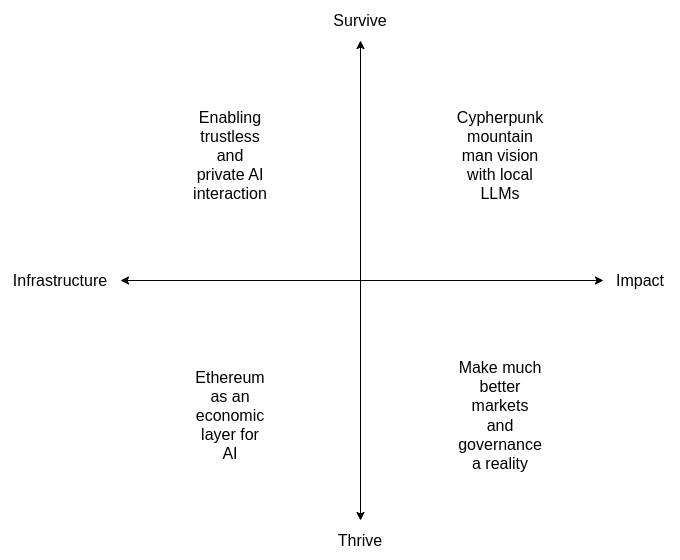
Two years ago, I wrote this post on the possible areas that I see for ethereum + AI intersections: https://vitalik.eth.limo/general/2024/01/30/cryptoai.html This is a topic that many people are excited about, but where I always worry that we think about the two from completely separate philosophical perspectives. I am reminded of Toly's recent tweet that I should "work on AGI". I appreciate the compliment, for him to think that I am capable of contributing to such a lofty thing. However, I get this feeling that the frame of "work on AGI" itself contains an error: it is fundamentally undifferentiated, and has the connotation of "do the thing that, if you don't do it, someone else will do anyway two months later; the main difference is that you get to be the one at the top" (though this may not have been Toly's intention). It would be like describing Ethereum as "working in finance" or "working on computing". To me, Ethereum, and my own view of how our civilization should do AGI, are precisely about choosing a positive direction rather than embracing undifferentiated acceleration of the arrow, and also I think it's actually important to integrate the crypto and AI perspectives. I want an AI future where: * We foster human freedom and empowerment (ie. we avoid both humans being relegated to retirement by AIs, and permanently stripped of power by human power structures that become impossible to surpass or escape) * The world does not blow up (both "classic" superintelligent AI doom, and more chaotic scenarios from various forms of offense outpacing defense, cf. the four defense quadrants from the d/acc posts) In the long term, this may involve crazy things like humans uploading or merging with AI, for those who want to be able to keep up with highly intelligent entities that can think a million times faster on silicon substrate. In the shorter term, it involves much more "ordinary" ideas, but still ideas that require deep rethinking compared to previous computing paradigms. So now, my updated view, which definitely focuses on that shorter term, and where Ethereum plays an important role but is only one piece of a bigger puzzle: # Building tooling to make more trustless and/or private interaction with AIs possible. This includes: * Local LLM tooling * ZK-payment for API calls (so you can call remote models without linking your identity from call to call) * Ongoing work into cryptographic ways to improve AI privacy * Client-side verification of cryptographic proofs, TEE attestations, and any other forms of server-side assurance Basically, the kinds of things we might also build for non-LLM compute (see eg. my ethereum privacy roadmap from a year ago https://ethereum-magicians.org/t/a-maximally-simple-l1-privacy-roadmap/23459 ), but for LLM calls as the compute we are protecting. # Ethereum as an economic layer for AI-related interactions This includes: * API calls * Bots hiring bots * Security deposits, potentially eventually more complicated contraptions like onchain dispute resolution * ERC-8004, AI reputation ideas The goal here is to enable AIs to interact economically, which makes viable more decentralized AI architectures (as opposed to non-economic coordination between AIs that are all designed and run by one organization "in-house"). Economies not for the sake of economies, but to enable more decentralized authority. # Make the cypherpunk "mountain man" vision a reality Basically, take the vision that cypherpunk radicals have always dreamed of (don't trust; verify everything), that has been nonviable in reality because humans are never actually going to verify all the code ourselves. Now, we can finally make that vision happen, with LLMs doing the hard parts. This includes: * Interacting with ethereum apps without needing third party UIs * Having a local model propose transactions for you on its own * Having a local model verify transactions created by dapp UIs * Local smart contract auditing, and assistance interpreting the meaning of FV proofs provided by others * Verifying trust models of applications and protocols # Make much better markets and governance a reality Prediction and decision markets, decentralized governance, quadratic voting, combinatorial auctions, universal barter economy, and all kinds of constructions are all beautiful in theory, but have been greatly hampered in reality by one big constraint: limits to human attention and decision-making power. LLMs remove that limitation, and massively scale human judgement. Hence, we can revisit all of those ideas. These are all things that Ethereum can help to make a reality. They are also ideas that are in the d/acc spirit: enabling decentralized cooperation, and improving defense. We can revisit the best ideas from 2014, and add on top many more new and better ones, and with AI (and ZK) we have a whole new set of tools to make them come to life. We can describe the above as a 2x2 chart. There's a lot to build!
Trailblazing Projects Pushing Boundaries
Humanity Protocol's mainnet drop with zkTLS, co-built with Reclaim, lets users prove web2 credentials, like flyer miles or hotel stays, via secure page access proofs, no URLs leaked. zkMe's zkKYC nails FATF compliance, verifying age or citizenship attributes decentralized. CredentialsZK stuffs attestations into wallets for real-time ZK challenges, shielding docs entirely.
Gate. com highlights Humanity's zkEVM fusion with dual biometrics and self-sovereign ID, crafting a human-centric layer. These aren't hypotheticals; they're live, reducing sybil in high-stakes spots like testnet faucets. As a value thinker, I see this as undervalued infrastructure: protocols baking in sybil resistant zk verification command premiums in adoption and resilience. For more on ZK enabling private identity, check this deep dive.
Yet challenges persist: proof generation compute, oracle dependencies for off-chain signals, interoperability across chains. Still, the trajectory points to ubiquitous zk identity credentials, where Web3 credentials flow trustlessly, human-verified yet veiled.
Solutions are materializing swiftly. zkEVM advancements slash proof times, while oracle networks like Chainlink decentralize signal feeds. Cross-chain bridges and standards like ERC-735 empower seamless zk identity credentials across ecosystems. These fixes aren't bandaids; they're foundational upgrades, much like compounding interest in a undervalued equity portfolio, quietly building exponential returns for early adopters.
Real-World Use Cases Driving Adoption
Picture a DAO vote where only humans count, proven via ZK without voter lists. Or airdrops gated by sybil resistant zk verification, ensuring fair distribution minus KYC nightmares. DeFi lenders query age proofs for compliance, borrowers flash zkKYC attestations, deals close instantly. Faucets like Google Cloud Web3's testnets now wield Self Protocol's PoH to starve bots, preserving genuine developer access.
Key ZK PoH Use Cases
- DAO Governance: Voters prove unique humanity via ZKPs to prevent Sybil attacks in decisions, as in Proof of Humanity (PoH).
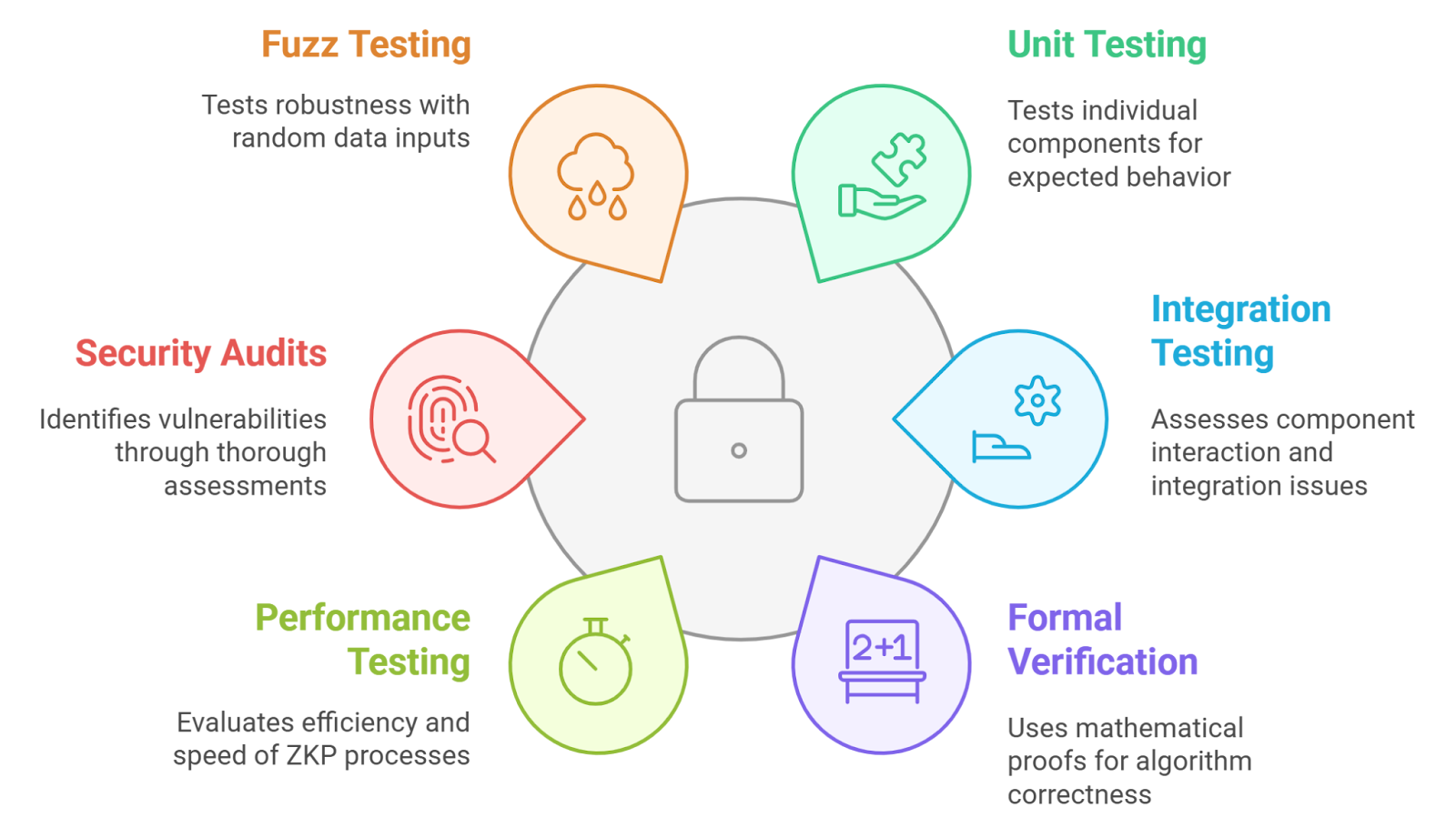
- Airdrop Eligibility: Confirm one human per drop without identity reveal, enhancing fair distribution and Sybil resistance in Web3.
- DeFi Compliance: Use zkMe's zkKYC for age or residency proofs meeting FATF rules privately.
- Testnet Faucets: Self Protocol with Google Cloud Web3 faucets verifies humans to curb bots.
- Social Recovery: Guardians prove humanity via ZK for secure wallet recovery without doxxing.
These applications transcend hype. In governance, Proof of Humanity registries already thwart fakes; ZK layers amplify this to permissionless scales. Biometric skeptics on Reddit might balk, but aggregated signals via zkTLS sidestep single-point dystopias, proving credentials from trusted web2 sources without leaks.

The Investor Lens: Undervalued Assets in ZK Identity
From a value investing perch, privacy first proof of humanity web3 screams opportunity. DCF models favor projects with durable moats: Humanity's mainnet traction, zkMe's compliance edge, CredentialsZK's dev-friendly APIs. Margins of safety abound in compute efficiencies and oracle redundancies. Bots erode $billions yearly; zk solutions reclaim that value, asymmetrically.
Consider sybil costs: skewed airdrops dilute tokens 20-50%, governance flips cost millions. ZK PoH protocols mitigate this at protocol level, accruing fees and token utility. Early metrics from zkProofers and zkTLS hint at hockey-stick growth, yet market pricing lags adoption curves. Hunt these now, as I do with equities: simple thesis, profound edge.
Web3's maturation hinges on human-centric primitives. ZKPs deliver zk proofs proof of humanity not as gimmick, but bedrock for scalable, fair systems. Developers at ZKHubs. com already arm builders with tools for this era, from credential circuits to humanity verifiers. As chains layer up, expect zk identity to permeate wallets universally, vesting power back to users. The math holds; the humans endure.




No comments yet. Be the first to share your thoughts!