

ZK Proofs for One Human One Proof Systems: Privacy-First Humanity Verification in Web3

In the evolving landscape of Web3, where decentralization promises freedom but Sybil attacks threaten integrity, zero-knowledge proofs emerge as a cornerstone for one human one proof zk systems. These cryptographic marvels allow individuals to affirm their unique humanity without exposing personal details, fostering trust in protocols from DAOs to airdrops. As bots proliferate, zk proof of humanity stands as the bulwark against manipulation, ensuring fair participation while upholding privacy.

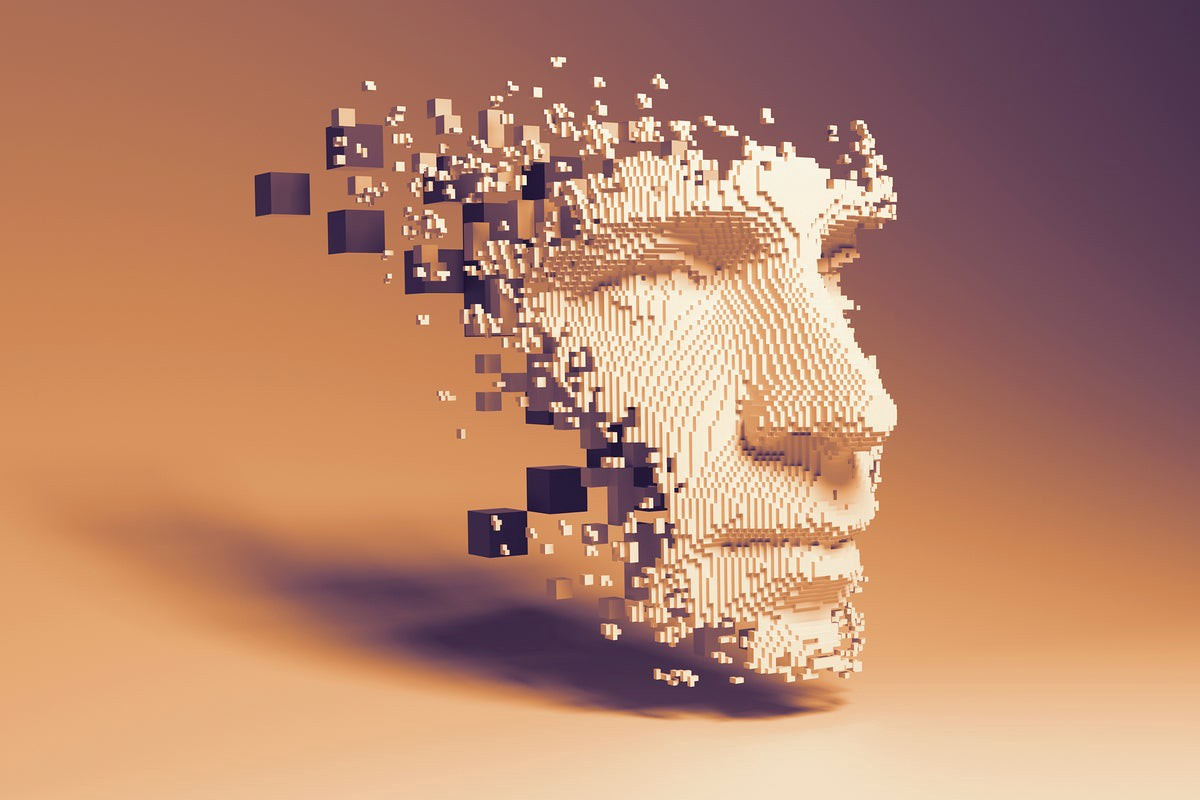
Traditional identity verification often demands trade-offs: either reveal too much or risk fraud. Enter zero knowledge humanity verification, where protocols like zkHumans and Humanity Protocol redefine the game. They harness ZKPs to prove personhood selectively, sidestepping the pitfalls of centralized databases or public registries. This methodical approach not only mitigates risks but scales seamlessly across chains, a necessity in fragmented blockchains.
Foundations of ZK Identity Uniqueness Proof in Web3
Zero-knowledge proofs operate on a simple yet profound principle: convince without convincing. A prover demonstrates a statement’s truth to a verifier, revealing nothing beyond validity. In proof of humanity web3 contexts, this translates to confirming ‘I am a unique human’ sans biometrics or documents. Projects draw from predecessors like Proof of Humanity’s Kleros-arbitrated registry, evolving them with ZK layers to eliminate doxing risks.
Consider the Sybil challenge: one entity spawning countless identities to sway governance or harvest rewards. ZK-AMS, for instance, employs recursive proof aggregation, maintaining constant verification costs regardless of batch size. This efficiency, proven on Ethereum testbeds, positions it for large-scale adoption, where non-recursive systems falter under load.

zkHumans Protocol: Crypto-Biometrics Meets Decentralized Sovereignty
Built on Mina Protocol’s recursive ZK proofs, zkHumans integrates crypto-biometrics for authentication that stays device-bound. Users prove ownership of identifiers or biometric uniqueness without transmitting data, embodying self-sovereign identity. This conservative design prioritizes capital preservation, metaphorically speaking, by shielding sensitive info from breaches.
Key use cases abound. In DAOs, it enforces one-human-one-vote, curbing plutocracy. For UBI or airdrops, it guarantees equitable distribution. Even wallet recovery benefits, as biometrics supplant seed phrases vulnerable to phishing. As of March 2026, its dApp lingers in private beta, signaling measured progress amid hype.
The protocol’s zero-knowledge core ensures selective disclosure: reveal voter status, not face. Cross-chain compatibility via Mina amplifies reach, while decentralization avoids single points of failure. Opinionated take: in a field rife with overpromises, zkHumans’ focus on verifiability without storage sets a methodical benchmark.

Humanity Protocol’s Tackle on the Unique-Human Problem
Parallel to zkHumans, Humanity Protocol deploys a human recognition module with privacy-preserving biometrics. Its self-sovereign framework lets users control data, deploying ZKPs to thwart identity leakage. Architecture-wise, it shuns centralized storage, opting for on-device processing that verifies singularity.
Sybil prevention headlines its strengths, vital for DeFi where fake accounts inflate liquidity pools, and DAOs where they skew votes. By March 2026, scalability refinements underscore its trajectory. Creatively, envision it as Web3’s anonymous bouncer: checks ID at the door, forgets the face instantly.
zkProofers, an extension, enhance user experience by proving claims succinctly. Drawing from Chainlink’s zero-knowledge identity insights, it proves attributes like ‘real human’ probabilistically, akin to OpenID3’s Bayesian method. This layered verification, blending biometrics and credentials, fortifies against sophisticated attacks.
GitHub’s elmol/zk-proof-of-humanity exemplifies open-source momentum, enabling Proof of Humanity registrants to generate zk identity uniqueness proof without doxing. This bridges legacy registries with modern ZK, allowing seamless migration to privacy-first models.
ZK-AMS Framework: Efficiency in Recursive Proofs
Addressing scalability head-on, the ZK-AMS framework introduces zero-knowledge admission management through recursive aggregation. Its permissionless batch submitter model processes admissions efficiently, leveraging Nova-style proofs and multi-key homomorphic encryption. Verification costs remain constant per batch, a methodical safeguard against surging gas fees in high-volume Web3 services.
On Ethereum testbeds, ZK-AMS outperforms baselines in throughput and latency, proving viable for communities scaling to thousands. For one human one proof zk systems, it validates credentials anonymously, ideal for DAOs enforcing membership without exposure. This conservative engineering minimizes on-chain footprints, preserving network resources while enabling credible anonymity.
Creatively positioned, ZK-AMS acts as Web3’s turnstile: admits verified uniques swiftly, rejects duplicates invisibly. Its framework complements biometric-heavy protocols by focusing on credential proofs, offering a modular layer for hybrid verifications.
Comparison of zkHumans, Humanity Protocol, and ZK-AMS
| Protocol | Key Features | Use Cases | Scalability | Current Status |
|---|---|---|---|---|
| zkHumans 🧑🔬 | 🔒 Zero-Knowledge 👁️ Crypto-Biometric Auth ⛓️ Decentralized on Mina |
🆔 Decentralized Identity 🛡️ Sybil-Resistance 💰 UBI/Airdrops |
High 📈 Recursive ZKPs Cross-chain |
Private Beta (Mar 2026) ⏳ |
| Humanity Protocol 👥 | 🔐 Self-Sovereign ID 👤 Privacy Biometrics 🗄️ Secure Storage |
🛡️ Sybil Prevention 💸 DeFi 🏛️ DAOs |
Developing Scalability 🔄 | In Development (Mar 2026) 🛠️ |
| ZK-AMS ⚙️ | 🔒 ZK Credential Validation 📦 Batch Submitter 🔄 Recursive Aggregation |
👤 Anonymous Identities 🚀 Web3 Admissions |
Excellent 📊 Constant costs High throughput |
Ethereum Testbed Live 🧪 |
Beyond these leaders, initiatives like Shinobu Labs’ OpenID3 apply Bayesian probabilities to credential linking, proving real humans across Web2 and Web3. Self Protocol and zkBID extend ZK to blockchain accounts, tackling mistrust with selective disclosures. Each iteration refines zero knowledge humanity verification, converging on robust Sybil resistance.
In practice, consider a DAO vote: participants submit ZK proofs attesting uniqueness, aggregated recursively for instant tallying. No faces scanned, no documents shared, just mathematical certainty. Airdrops similarly benefit, distributing tokens only to verified humans, curbing whale manipulations. DeFi platforms gain from fraud-proof lending, where borrowers prove personhood sans KYC overkill.
Challenges and Methodical Paths Forward
Yet hurdles persist. Biometric liveness detection demands computational heft, potentially excluding low-end devices. Interoperability across chains requires standardized proof formats, a gap zkHumans edges toward with Mina. Quantum threats loom, though lattice-based ZK schemes offer resilience.
Opinionated view: prioritize protocols with audited recursion and device-bound keys, echoing risk management’s ‘preserve capital first’ by safeguarding data foremost. As Web3 matures, these systems will underpin fair economies, where humanity, not handles, dictates influence.
Proof-of-Personhood protocols from the Identity Management Institute underscore this shift, authenticating individuals securely. Chainlink’s zero-knowledge identity frameworks provide foundational tools, integrable with oracles for real-world attestations.
Measured adoption signals maturity: zkHumans’ beta waitlist swells, Humanity Protocol iterates infrastructure, ZK-AMS readies mainnet. Together, they forge proof of humanity web3 ecosystems where privacy fuels participation, not peril. Developers at ZKHubs. com already embed these for credential sharing, proving the stack’s readiness. This trajectory promises a decentralized future, verified yet veiled, methodical in its march toward ubiquity.