
What Are ZK Hubs?
A ZK Hub is a specialized infrastructure layer designed to accelerate the generation and verification of zero-knowledge proofs. Instead of relying on slow, single-node proving, these hubs aggregate computational workloads, allowing multiple proofs to be processed in parallel. This architecture directly addresses the primary bottleneck in scaling blockchain networks: the time and cost required to generate cryptographic evidence.
By combining techniques like multi-party computation (MPC) with optimized proof systems, ZK Hubs can achieve significant speed improvements over traditional methods. Some implementations report up to a 36x improvement in proof generation times, making real-time verification feasible for complex workloads like Ethereum block states.
The core value proposition is simplicity for developers. Rather than managing complex proving circuits locally, applications can offload this heavy lifting to the hub. This allows teams to focus on building user-facing features while the hub handles the cryptographic heavy lifting in the background.
Is Zero-Knowledge Proof Legit?
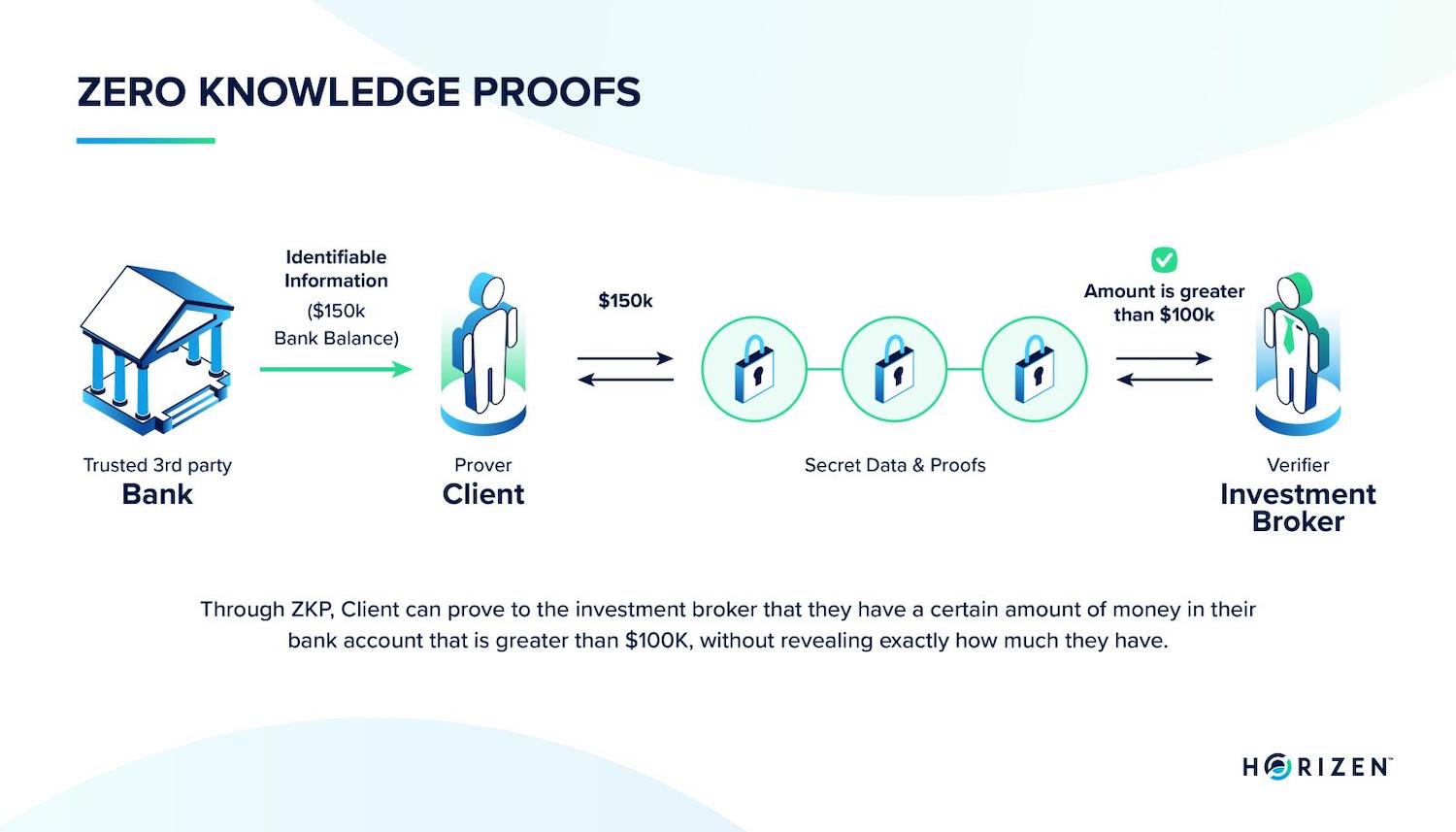
Yes, zero-knowledge proofs are a mathematically sound technology that brings trustworthiness to Web3 privacy. They allow one party to prove to another that a statement is true without revealing any information beyond the validity of the statement itself. This foundational concept is increasingly viewed as essential for secure future societies requiring high levels of privacy.
Key Takeaways
- ZK Hubs aggregate proof generation to reduce latency and cost.
- They enable real-time verification for complex blockchain states.
- Zero-knowledge proofs are a legitimate, mathematically verified privacy technology.
Evaluating zk hub choices that change the plan
Choosing a ZK hub requires balancing speed, cost, and compatibility. These hubs act as the proving grounds for zero-knowledge proofs, but their underlying architectures differ significantly. Understanding these tradeoffs helps you select the right infrastructure for your specific use case, whether it is real-time verification or batch processing for rollups.
Speed vs. Proof Size
Some hubs prioritize raw proving speed, offering 36x improvements over traditional methods by combining Multi-Party Computation (MPC) with ZK proofs. This is ideal for high-throughput applications needing instant feedback. Others focus on minimizing proof size, which reduces on-chain verification costs. Smaller proofs are cheaper to submit to Ethereum but may require more time to generate.
Client-Side vs. Server-Side
Client-side proving allows users to generate proofs directly in their browsers, enhancing privacy by keeping data off centralized servers. This is critical for low-latency applications like real-time block verification. Server-side hubs, however, often leverage powerful GPU clusters to handle complex workloads faster. The tradeoff is potential data exposure and reliance on third-party trust assumptions.
Compatibility and Ecosystem
Not all hubs support every zkVM or circuit type. Some are optimized for specific stacks like RISC Zero or SP1, while others offer broader compatibility. Ensure the hub supports the programming language and constraints your project requires. Incompatibility can lead to significant development delays and increased engineering overhead.
| Factor | Speed Focus | Cost Focus | Privacy Focus |
|---|---|---|---|
| Proving Method | MPC + ZK Hybrid | Standard ZK Circuits | Client-Side Only |
| Latency | Low (Real-time) | Medium | Variable |
| On-Chain Cost | Higher (Larger Proofs) | Lower (Optimized Size) | N/A |
| Trust Model | Partial Trust (MPC) | Trustless | Zero Trust |
How to choose a ZK Hub for your project
Selecting a ZK Hub is not just about picking the fastest prover; it is about matching the infrastructure to your specific workload. Whether you are building a privacy layer for real-world assets or optimizing a rollup, the right hub reduces latency and cost. Use this framework to evaluate options.

Real-time verification demands low-latency proving. Look for hubs that support client-side proving or optimized MPC circuits. If you are processing Ethereum blocks or rollup states, standard batch proving may be too slow. Prioritize hubs that advertise sub-second finality for your specific circuit type.
Not all ZK frameworks play nicely together. Verify if the hub supports your chosen proving system (e.g., Plonky2, Halo2, or Circom). Incompatibility here creates integration debt that slows down development. Choose a hub that offers native SDKs or clear documentation for your existing toolchain.

Speed means little if the cost per proof is prohibitive. Compare the price per million proofs across providers. Some hubs offer volume discounts or free tiers for testing. Factor in the cost of data availability and storage, which can add up quickly for high-throughput applications.
A ZK Hub is only as secure as its underlying nodes. Check if the hub is decentralized or run by a single entity. For sensitive applications like real-world assets, decentralization reduces single points of failure. Look for audits, bug bounties, and a transparent incident response history.
Spotting Misleading Claims in ZK Hub Marketing
The push to scale zero-knowledge proofs often outpaces the underlying infrastructure. When evaluating ZK hubs, look for concrete benchmarks rather than vague promises of "instant" verification. For example, some providers claim 36x improvements over current proving times, but without specifying the baseline circuit or hardware, these numbers can be misleading. Always check if the speed gain applies to simple identity proofs or complex rollup state transitions.
Another common pitfall is the confusion between client-side proving and server-side aggregation. Claims of "low-latency, client-side proving" suggest real-time verification for heavy workloads like Ethereum blocks, but this often requires significant local computational resources that most users do not possess. If a hub promises seamless user experience without mentioning local hardware constraints, it may be hiding the true cost of proof generation.
Finally, be wary of projects that combine MPC (Multi-Party Computation) and zk-proofs without clearly explaining the security tradeoffs. While the combination can speed up proof generation, it introduces new trust assumptions. Ensure the protocol's documentation explicitly details how trust is minimized when merging these technologies. If the security model is obscured by technical jargon, it is likely a weak option for serious deployment.
Zk hub: what to check next
Zero-knowledge proofs are a legitimate cryptographic method for verifying data without revealing the underlying information. They are not a scam or a theoretical abstraction; they are mathematically proven protocols that form the backbone of modern privacy-preserving systems. As NTT Data notes, ZK technology brings trustworthiness to Web3 privacy, enabling users to prove ownership or validity without exposing sensitive details.
The primary objection often stems from confusion between the mathematical proof and the implementation. A proof is valid, but the hub generating it must be secure. ZK Hubs address this by aggregating proofs and optimizing generation times, making the technology viable for mass adoption rather than just high-end institutional use.
No comments yet. Be the first to share your thoughts!