Why verifying AI models matters now
Modern AI models are black boxes. They process vast amounts of data and produce outputs that are difficult to audit or trace. This opacity creates significant risks. Companies worry about intellectual property theft when proprietary models are deployed. Regulators demand transparency to ensure decisions are fair and compliant. Attackers seek to tamper with model weights to steal data or manipulate results.
Zero-knowledge proofs AI offers a solution to this trust deficit. This technology allows one party to prove to another that a statement is true without revealing any information beyond the validity of the statement itself. In the context of machine learning, it means a model can prove it made a correct prediction using specific data, without exposing the underlying algorithm or the private inputs used.
This capability changes how we approach secure AI deployment. Instead of trusting a model based on faith or limited audits, stakeholders can verify its integrity cryptographically. This ensures that the model behaves as expected, even in untrusted environments. It bridges the gap between privacy and accountability, allowing organizations to leverage powerful AI without compromising sensitive information.
Protecting proprietary model weights
Companies often hesitate to deploy advanced AI on third-party cloud infrastructure because of intellectual property theft. Running inference on external servers traditionally requires uploading proprietary model weights, effectively handing over the "secret sauce" to the hosting provider. This creates a significant security gap where competitors or malicious actors could reverse-engineer the model architecture and parameters.
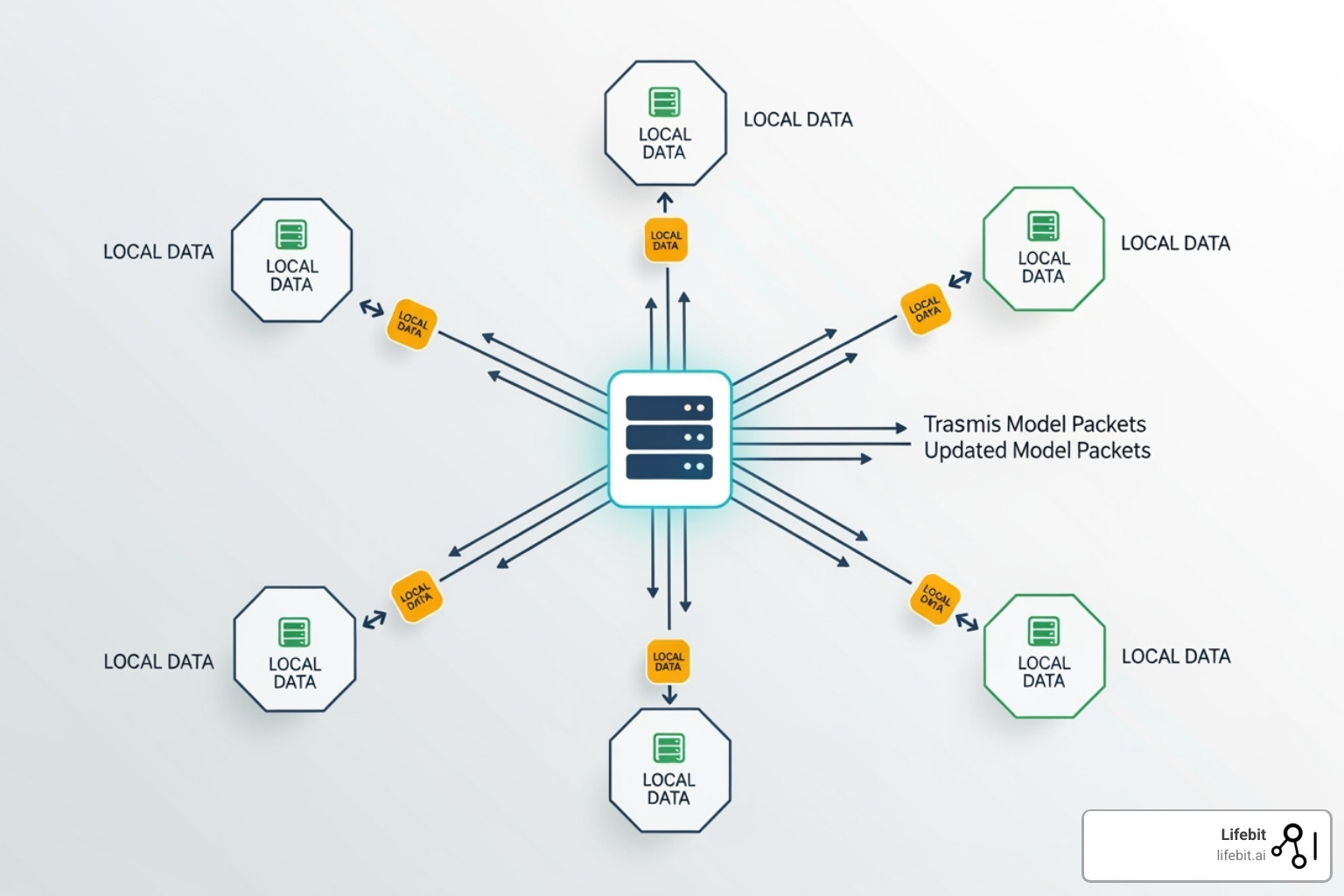
Zero-knowledge proofs AI resolves this by allowing a client to verify that a computation was performed correctly without ever revealing the underlying data or model. In this setup, the model owner sends encrypted weights to the cloud provider. The provider runs the inference, but instead of returning the raw output, they generate a cryptographic proof. This proof demonstrates that the correct model was executed on the correct input, ensuring the result is valid while keeping the proprietary weights hidden from the host.
This approach transforms the cloud from a potential liability into a secure, black-box execution environment. The client receives the inference result and the proof, confirming accuracy without the risk of IP exposure. This capability is essential for industries like finance and healthcare, where model ownership is as critical as data privacy.
Verifying Healthcare Data Privacy
Healthcare providers face a persistent dilemma: they need to train AI models on vast amounts of patient data to improve diagnostic accuracy, but sharing sensitive records violates strict privacy regulations like HIPAA. Zero-knowledge proofs AI offers a way out. This technology allows a hospital to prove that an AI diagnosis was made using compliant, private patient data without ever exposing the sensitive records themselves.
In this setup, the hospital acts as the prover, and the regulatory body or third-party auditor acts as the verifier. Instead of sending raw patient files, the system generates a cryptographic proof that the AI processed real, authorized data according to the correct protocol. This ensures the results are accurate and the data remained encrypted throughout the process, effectively bridging the gap between machine learning utility and patient privacy.
This approach transforms how medical institutions handle compliance. By using zero-knowledge proofs, hospitals can share diagnostic insights with researchers or insurers while keeping patient identities and medical histories completely hidden. It creates a trustless environment where verification is mathematically guaranteed, not just administratively promised.
Decentralized AI Inference Networks
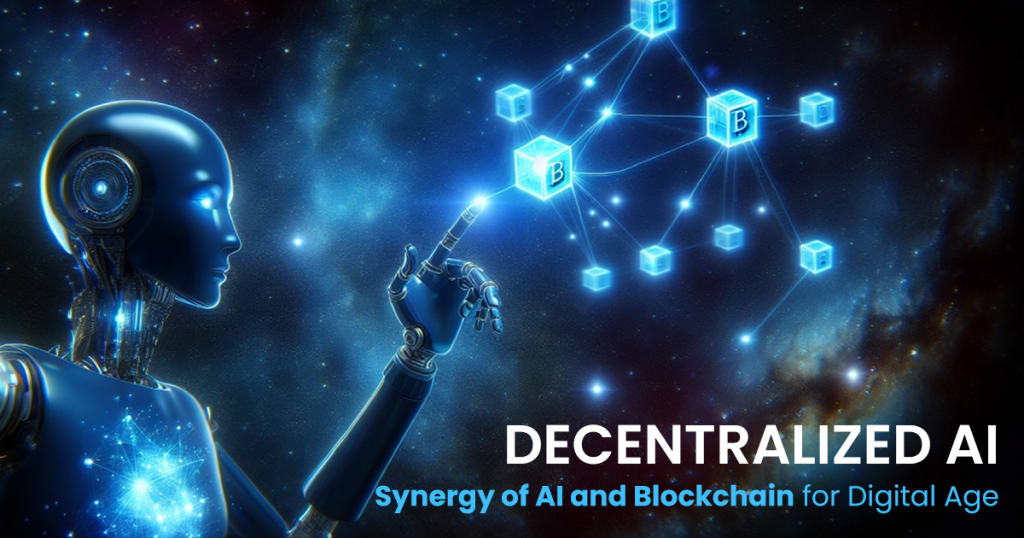
Zero-knowledge proofs AI enables a trustless marketplace for compute by allowing distributed nodes to prove they are running valid AI computations without revealing the model weights or the input data. In this architecture, known as ZK Hubs, the network verifies the mathematical integrity of the inference rather than trusting the hardware or the operator.
This setup creates a verifiable layer over decentralized networks. When a node processes a request, it generates a cryptographic proof that the output matches the expected result of the specific model and input. Other nodes or users can validate this proof instantly, ensuring the computation was performed correctly and securely.
The result is a system where privacy and verification coexist. Users can submit sensitive data to a public network of compute providers, confident that their inputs remain private and that the AI’s output is authentic. This capability is essential for enterprise applications requiring strict data governance across distributed infrastructures.
Benefits of Decentralized Inference
-
Data Privacy
Inputs and model weights remain encrypted and hidden from the compute provider. -
Compute Verification
Cryptographic proofs guarantee the AI ran the correct algorithm without tampering. -
Trustless Marketplace
Users can rent compute from unknown nodes with mathematical certainty of accuracy. -
Auditability
Every inference step can be independently verified on-chain or off-chain.
By shifting trust from hardware to mathematics, zero-knowledge proofs AI transforms decentralized networks into reliable venues for private machine learning. This approach supports a new generation of applications where data sovereignty and computational integrity are non-negotiable.
Scaling zero-knowledge proofs AI for 2026
The primary hurdle for zero-knowledge proofs AI has always been the computational overhead. Generating a proof for a complex neural network can take hours and cost hundreds of dollars in gas fees, making it impractical for real-time inference or mass adoption. Until recently, the technology was too slow for anything beyond academic demonstrations or high-value, low-frequency audits.
However, architectural shifts in 2025 and 2026 are rapidly closing this gap. New frameworks like ZK Hubs are decentralizing the proof generation workload, allowing multiple nodes to contribute to the verification process. This distributed approach significantly reduces the time required to generate a single proof, moving the technology from theoretical possibility to practical utility.
By 2026, we expect proof generation times to drop from hours to minutes, with costs falling to fractions of a cent. This efficiency gain is what will finally allow zero-knowledge proofs AI to scale beyond niche use cases. Enterprises can now verify model outputs without compromising proprietary data, creating a viable path for mainstream deployment in finance, healthcare, and identity verification.
Frequently asked questions about ZKML
How fast are zero-knowledge proofs AI models?
Generating proofs for machine learning models remains computationally expensive. While verification is nearly instant, the proving step requires significant processing power, often taking minutes or hours depending on model complexity. Researchers are actively optimizing circuits to reduce this latency, but it is not yet suitable for real-time inference at scale.
Can I verify a neural network without seeing the weights?
Yes. This is the core value of zero-knowledge proofs AI. A prover can demonstrate that a specific neural network architecture produced a given output using private weights, without revealing the weights themselves or the training data. The verifier only checks the mathematical validity of the proof.
Which frameworks support ZKML today?
Several open-source projects are building the infrastructure for private machine learning. Notable frameworks include Circom for circuit design, SnarkJS for proof generation, and specialized libraries like TensorZero that aim to simplify integrating ZKPs into existing ML pipelines. The ecosystem is growing rapidly as adoption increases.
Is ZKML ready for production use?
It is moving beyond experimental phases. While early adopters are using it for privacy-preserving identity verification and secure bidding in auctions, widespread production use is still limited by computational overhead. It is best suited for high-value scenarios where data privacy is more critical than raw inference speed.
No comments yet. Be the first to share your thoughts!