
The shift to privacy-preserving identity
Enterprise identity management is undergoing a fundamental structural change in 2026. Organizations are moving away from centralized credential storage toward decentralized, zero-knowledge (ZK) based systems. This transition is driven by escalating regulatory pressure and the growing necessity to protect sensitive user data against systemic breaches.
Traditional Know Your Customer (KYC) models require enterprises to collect, store, and verify large volumes of personally identifiable information (PII). This centralized accumulation of data creates significant liability. Under frameworks like the General Data Protection Regulation (GDPR) and the California Consumer Privacy Act (CCPA), the legal risk of holding unnecessary data often outweighs the operational convenience. ZK proofs allow verification of attributes—such as age or residency—without revealing the underlying data itself.
Adoption is no longer theoretical. Major financial institutions and healthcare providers are piloting ZK identity hubs to streamline cross-border compliance. By shifting the verification burden to cryptographic proof, enterprises can maintain audit trails while minimizing their exposure to data theft. This approach transforms identity from a static record into a dynamic, privacy-first asset.
The move toward ZK hubs represents a strategic response to the limitations of legacy identity infrastructure. As regulatory scrutiny intensifies, the ability to prove identity without exposing identity becomes a competitive advantage. Enterprises that adopt these systems position themselves to meet future compliance standards while building deeper trust with users concerned about privacy.
Comparing ZK Hub Architectures
Enterprise identity infrastructure requires selecting a ZK hub model that aligns with specific regulatory and operational constraints. The current landscape is defined by three distinct architectural approaches: general-purpose rollups, specialized identity hubs, and hybrid verification layers. Each model offers different trade-offs regarding scalability, privacy guarantees, and enterprise readiness.
The following comparison evaluates leading ZK hub architectures based on technical capacity, privacy mechanisms, and integration complexity. This analysis relies on official documentation and primary development roadmaps to ensure accuracy for legal and compliance review.
| Hub Model | Scalability | Privacy Guarantees | Enterprise Readiness |
|---|---|---|---|
| ZKsync Era | High (Rollup) | Selective (Public Proofs) | Medium (Standardized SDKs) |
| Aztec Connect | High (Private Rollup) | Full Confidentiality | High (Private Identity) |
| Specialized Identity Hubs | Variable | Selective Disclosure | High (Compliance-First) |
ZKsync Era represents the dominant general-purpose rollup architecture. It prioritizes high throughput and broad developer adoption through standardized software development kits. However, its privacy model relies on public proofs, which may not satisfy strict data minimization requirements for sensitive identity attributes. The Matter Labs roadmap indicates a continued focus on protocol development, with significant resource allocation planned for 2026 to enhance network stability and integration capabilities.
Aztec Connect offers a private rollup architecture designed for confidential computations. This model provides full confidentiality for identity proofs, making it suitable for use cases where transaction data and identity attributes must remain hidden from the public ledger. While privacy guarantees are superior, integration complexity is higher due to the need for specialized cryptographic libraries and compliance adapters.
Specialized identity hubs focus on selective disclosure and compliance-first design. These architectures are often built specifically for identity verification, allowing users to prove specific attributes (e.g., age, residency) without revealing underlying data. While scalability may vary depending on the underlying chain, enterprise readiness is typically high due to native support for regulatory reporting and audit trails.
Implementing Scalable ZK Rollups
Integrating zero-knowledge (ZK) rollups into enterprise identity workflows requires a structured approach that prioritizes both cryptographic integrity and operational scalability. For legal and regulatory environments, the transition from centralized verification to decentralized proof generation must be managed through defined technical phases. This section outlines the sequential steps for deploying ZK rollups, ensuring that identity data remains private while transaction throughput scales to enterprise levels.
1. Define Identity Schema and Privacy Boundaries
Before technical integration, enterprises must map their identity attributes to specific ZK circuits. This involves identifying which data points require absolute privacy (e.g., biometric hashes, government ID numbers) and which require public verifiability (e.g., age verification status, credential validity). The schema design directly impacts circuit complexity and proof generation time. Use established standards like W3C Verifiable Credentials to structure data before encoding it into the ZK proof system. This ensures that the resulting proofs are interoperable with existing enterprise identity providers.
2. Select the ZK Rollup Architecture
Choose between ZK-Rollups (optimistic or fully zero-knowledge) and ZK-SNARKs/SNARK-based solutions based on latency requirements. For high-frequency identity checks, such as real-time access control, low-latency proof verification is critical. ZK-SNARKs offer smaller proof sizes and faster verification times, making them suitable for mobile and web-based identity wallets. Conversely, ZK-STARKs provide quantum resistance and transparent setup, which may be preferred for long-term archival identity records. Evaluate the trade-offs between proof generation overhead and verification speed against your specific compliance needs.
3. Integrate Proof Generation into Identity Providers
Connect your existing Identity Provider (IdP) to the ZK circuit logic. This integration typically involves a middleware layer that collects user attributes, generates the witness data, and triggers the proof generation service. Ensure that the proof generation process occurs in a secure, trusted execution environment to prevent witness data leakage. For enterprise scale, consider batching multiple identity proofs into a single rollup block to reduce gas costs and increase throughput. This batching mechanism is essential for handling large-scale identity verification events, such as mass onboarding or periodic credential renewals.
4. Deploy Verification Contracts on the Target Chain
Deploy the verifier smart contract on the chosen blockchain layer (L2 or L1). This contract must include the verification key for your specific ZK circuit. Ensure that the contract interface supports batch verification if your architecture relies on aggregated proofs. Test the contract rigorously with a variety of test vectors to guarantee that invalid proofs are rejected and valid proofs are accepted without exception. This step is critical for maintaining the integrity of the identity system and preventing fraudulent access.
5. Establish Monitoring and Compliance Audits
Implement comprehensive monitoring for proof generation and verification metrics. Track latency, success rates, and error logs to identify bottlenecks in the identity workflow. Regularly audit the ZK circuits and smart contracts for vulnerabilities, particularly focusing on side-channel attacks and circuit misconfigurations. Maintain clear audit trails that link identity proofs to their underlying events without exposing sensitive user data, ensuring compliance with regulations such as GDPR and CCPA.
Begin by conducting a formal security audit of the ZK circuit logic. Engage specialized firms with expertise in cryptographic protocols to identify potential weaknesses in the proof generation process. This step ensures that the underlying mathematics are sound and that no backdoors exist that could compromise user privacy.

Move beyond synthetic test vectors by testing the system with anonymized real-world identity data. This helps validate the performance of the ZK rollup under actual load conditions and ensures that edge cases in identity schemas are handled correctly. Monitor proof generation times and verification costs to optimize the circuit for scalability.
Deploy the ZK rollup integration to production using a phased rollout strategy. Start with a small group of users or a specific department to monitor stability and user experience. Gradually expand the rollout while maintaining close observation of system performance and security metrics. This approach minimizes risk and allows for rapid iteration based on real-world feedback.
The successful implementation of ZK rollups for enterprise identity hinges on the careful alignment of cryptographic rigor with operational pragmatism. By following these structured steps, organizations can leverage the scalability of ZK technology to enhance privacy and compliance without sacrificing performance.
Navigating compliance and risk
Enterprise adoption of zero-knowledge identity systems is not merely a technical upgrade; it is a regulatory undertaking. Organizations deploying ZK hubs must treat compliance as a foundational architecture component, not an afterthought. The primary objective is to satisfy Know Your Customer (KYC) and Anti-Money Laundering (AML) mandates while preserving user privacy through cryptographic proof.
The most significant risk in this domain is the misalignment between cryptographic validity and legal admissibility. A proof may be mathematically sound but legally insufficient if it fails to meet jurisdictional data residency or auditability requirements. For instance, the European Union’s General Data Protection Regulation (GDPR) imposes strict rules on data minimization. ZK systems offer a natural fit for the "privacy by design" principle, but enterprises must ensure that the underlying circuit logic does not inadvertently retain unnecessary personal data that violates these statutes.
To mitigate these risks, legal teams and engineering departments must collaborate on a unified compliance framework. This involves defining clear boundaries for what data is hashed, what is proven, and what is discarded. Regular third-party audits of the ZK circuits are essential to verify that no backdoors or data leaks exist within the proof generation process. By treating regulatory compliance as a continuous engineering challenge, enterprises can deploy ZK identity solutions with confidence, ensuring they meet the high standards required for financial and healthcare sectors.
Market trends and future outlook
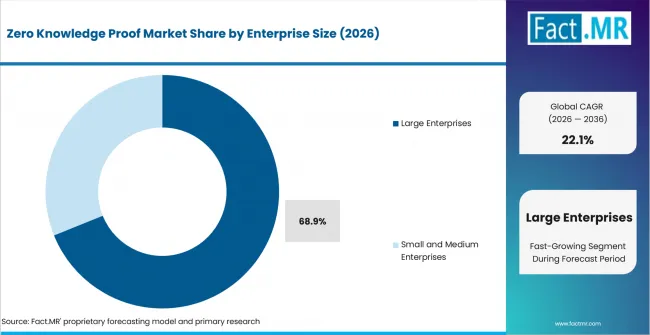
The ZK hub sector has shifted from experimental pilots to structured enterprise deployments in 2026. Funding has stabilized, with capital flowing primarily into infrastructure providers that offer compliant identity layers rather than speculative protocol bets. Adoption is now driven by regulatory necessity; financial institutions and healthcare providers are integrating zero-knowledge proofs to satisfy KYC and data minimization requirements without exposing sensitive user data.
Market analysis indicates a consolidation phase among smaller ZK infrastructure providers. Larger platforms are acquiring specialized identity verification tools to create end-to-end solutions for enterprise clients. This trend is evident in the recent partnerships between major cloud providers and ZK protocol developers, aiming to embed privacy-preserving identity checks directly into existing enterprise software stacks.
Looking ahead, the focus is on interoperability. As different ZK hubs develop their own standards, cross-chain identity verification is becoming a critical requirement. The next wave of development will likely prioritize seamless integration between these hubs, allowing enterprises to verify user identities across multiple platforms without redundant verification processes.
No comments yet. Be the first to share your thoughts!