
Defining the ZK hub landscape
In 2026, the term "ZK hub" has moved beyond generic scaling narratives to describe concentrated ecosystems of developers, protocols, and community nodes driving zero-knowledge proof adoption. These hubs are no longer just technical testbeds; they are the central nervous systems of the ZK economy, connecting infrastructure providers with the developers who build on top of them.
A ZK hub is defined by its ability to aggregate resources. This includes access to proving power, developer tooling, and grant programs, but also the social capital that accelerates adoption. Unlike isolated protocols, a hub acts as a liquidity pool for talent and innovation, reducing the friction for new projects entering the space.
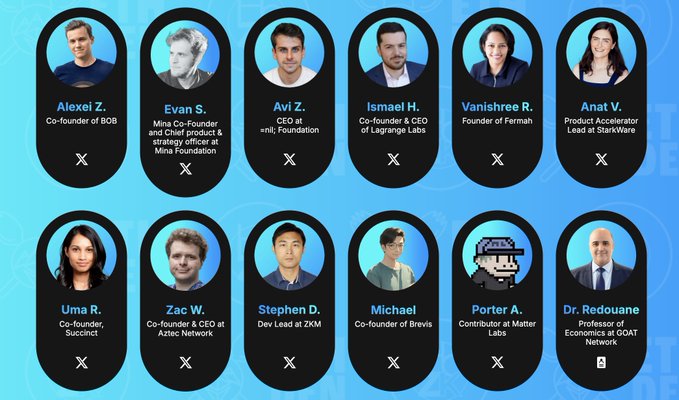
The physical and digital convergence of these hubs is evident in major industry events. For instance, the ZK Hub at ETHDenver serves as a prime example of this concentrated activity, hosting thousands of developers over two days to focus exclusively on ZK integration and education.
Community sentiment reflects this shift toward infrastructure. Developers are increasingly prioritizing projects that offer robust hub support, viewing them as essential for long-term viability.
This ecosystem approach ensures that ZK technology is not just a backend utility but a visible, collaborative frontier in the broader crypto landscape.
ZKsync's 2026 infrastructure push
ZKsync is shifting its 2026 strategy from standalone chain expansion to a broader infrastructure model. The roadmap centers on three pillars: Prividium, ZK Stack, and Airbender. These initiatives aim to make ZK technology accessible to other developers rather than just users of the ZKsync chain.


The shift toward an infrastructure provider model signals a maturation in the ZK sector. By offering these tools, ZKsync positions itself as a foundational layer for the next generation of blockchain applications.

Community sentiment reflects cautious optimism. Developers are particularly interested in the ease of use provided by ZK Stack. The potential for reduced costs via Airbender is also a key talking point.
Identity and proof-of-humanity use cases
Zero-knowledge hubs are currently serving as the foundational layer for decentralized identity, solving the persistent tension between user privacy and credential verification. By leveraging ZK proofs, protocols allow individuals to attest to specific attributes—such as age, residency, or human status—without exposing the underlying personal data. This capability is critical for infrastructure that requires trustless verification while minimizing data retention risks.
The application extends beyond simple identity management into proof-of-humanity mechanisms, which aim to mitigate Sybil attacks in decentralized governance and airdrop distributions. Projects operating within these hubs are developing succinct proofs that confirm a unique human actor without linking that action to a real-world identity. This approach preserves the anonymity of participants while ensuring that voting power or token allocations are not concentrated among automated bots.
"The balance between privacy and utility in ZK identity is not about hiding data, but about revealing only what is necessary for the protocol to function."
Community engagement around these solutions remains high, with developers frequently discussing implementation challenges and ethical considerations on social platforms.
As these hubs scale, the focus is shifting toward interoperable standards that allow credentials verified on one chain to be recognized across others. This cross-chain compatibility is essential for creating a cohesive digital identity layer that supports the broader DeFi and DAO ecosystems.
Global ZK community events and gatherings
Zero-knowledge infrastructure has moved beyond code repositories into physical and digital hubs where builders, investors, and researchers converge. These gatherings serve as the primary nodes for protocol development, funding alignment, and technical standardization.
House of ZK and Major Conferences
House of ZK has established itself as a central organizer for global ZK industry leaders, hosting events at major conferences including EthDenver, EthCC, and the Singapore Blockchain Week. These gatherings provide a structured environment for discussing the latest advancements in zero-knowledge proofs and their integration into broader blockchain infrastructure.
The community aspect is equally vital. The Zcash community, for instance, continues to organize specialized initiatives like the Zk Av Club 2026, which focuses on media infrastructure, archiving, and community support. These efforts ensure that the knowledge base surrounding ZK technology remains accessible and well-documented.
Regional Hubs and Speaker Engagement
Regional hubs are emerging as critical points of innovation. As noted by industry speakers at Istanbul Blockchain Week 2026, cities like Istanbul are becoming energetic centers for digital finance and blockchain infrastructure adoption. These local ecosystems foster connections between founders, venture capitalists, and technical builders, accelerating the practical application of ZK technology.
Tokenomics and governance structures
ZK hub infrastructure projects are moving beyond speculative token launches to establish governance frameworks that directly support long-term development. The token mechanics for these networks are designed to align validator incentives with network security and protocol upgrades. This shift reflects a broader industry maturation where utility and governance rights are bundled into the core economic model.
Community discourse on platforms like ZK Nation highlights the tension between decentralization and operational efficiency. Participants frequently debate the optimal distribution of voting power among early contributors versus future ecosystem partners. These discussions are critical for ensuring that governance remains resilient against centralization pressures as the network scales.
No comments yet. Be the first to share your thoughts!