
What makes a zero-knowledge hub
A zero-knowledge hub is the centralized infrastructure layer that manages the lifecycle of digital credentials within a privacy-preserving identity system. Unlike general zk-rollups, which aggregate transactions to scale blockchain throughput, a ZK hub focuses on credential issuance, proof generation, and on-chain verification for identity management. It acts as the trusted anchor where users hold their private keys and sensitive data locally, while the hub maintains the public keys and schema definitions required to validate those credentials.
The hub’s primary role is to facilitate the interaction between the user’s device and the blockchain. When a user needs to prove they are over 18 or hold a valid work permit, their device generates a zero-knowledge proof using the hub’s public parameters. This proof confirms the attribute without revealing the underlying data—such as the exact birthdate or document number—to the verifier. The hub ensures that the proof is mathematically sound and that the credential was issued by a legitimate authority, preventing forgery without exposing personal information.
Consider Polygon ID as a practical example of this architecture. It operates as a hub where issuers like governments or corporations can sign credentials. Users store these in their wallets and generate proofs on-demand. Similarly, Worldcoin uses a hub-like structure for its World ID, where biometric data is hashed locally and the hub verifies the uniqueness of the proof against a global Merkle tree. In both cases, the hub does not store the raw biometric or personal data; it only stores the cryptographic commitments necessary to verify that the user is who they claim to be.
This distinction is critical for enterprise identity. Legacy systems often require users to upload documents to a central server, creating a single point of failure for data breaches. A ZK hub shifts this model: the sensitive data never leaves the user’s device. The hub only validates the cryptographic integrity of the proof, ensuring that the enterprise can trust the identity claim without ever seeing the underlying personal details. This approach minimizes liability and aligns with strict privacy regulations like GDPR, which limit how much personal data organizations can collect and store.
Leading hubs for verifiable credentials
Enterprise identity requires more than raw cryptography; it demands infrastructure that can aggregate, issue, and verify credentials at scale. Zero-knowledge hubs serve as the central nervous system for this process, allowing organizations to manage proof generation and on-chain verification without exposing sensitive user data. These platforms act as the bridge between legacy identity systems and decentralized trust models.
The following platforms represent the current leading hubs for enterprise-ready verifiable credentials. Each offers distinct mechanisms for credential issuance and privacy-preserving verification, tailored to specific enterprise needs such as KYC compliance or proof of humanity.
Top Enterprise Zero-Knowledge Hubs
-
Polygon ID
Built on Polygon’s zkEVM infrastructure, Polygon ID provides a complete suite for issuing and verifying zero-knowledge credentials. It enables enterprises to create reusable digital identities that allow users to prove attributes (like age or residency) without revealing the underlying data. Its integration with Ethereum ensures robust on-chain verification capabilities. -
Worldcoin (World ID)
Worldcoin focuses on proof of humanity, using biometric data to issue unique, privacy-preserving identifiers. For enterprises, World ID serves as a hub to verify that a user is a unique human without collecting personally identifiable information. This is particularly valuable for preventing sybil attacks in token distributions or access control systems. -
Serto
Serto offers a modular identity infrastructure designed for enterprise integration. It allows organizations to issue verifiable credentials that can be verified across different chains and applications. Its focus is on simplifying the developer experience for credential issuance while maintaining strict privacy standards for the end user. -
Polygon CDK (Customizable Data Kinetics)
While often viewed as a rollup framework, Polygon CDK enables enterprises to launch their own dedicated zero-knowledge chains. This acts as a private hub for credential verification, allowing companies to keep sensitive identity data off public ledgers while still leveraging the security of the broader Ethereum ecosystem.
These hubs simplify the complex mathematics of zero-knowledge proofs into usable APIs and SDKs. For legacy systems, this means that credential verification can be integrated into existing workflows with minimal disruption. The focus shifts from managing private keys to managing trust policies and verification rules.

How zk-rollups enable privacy at scale
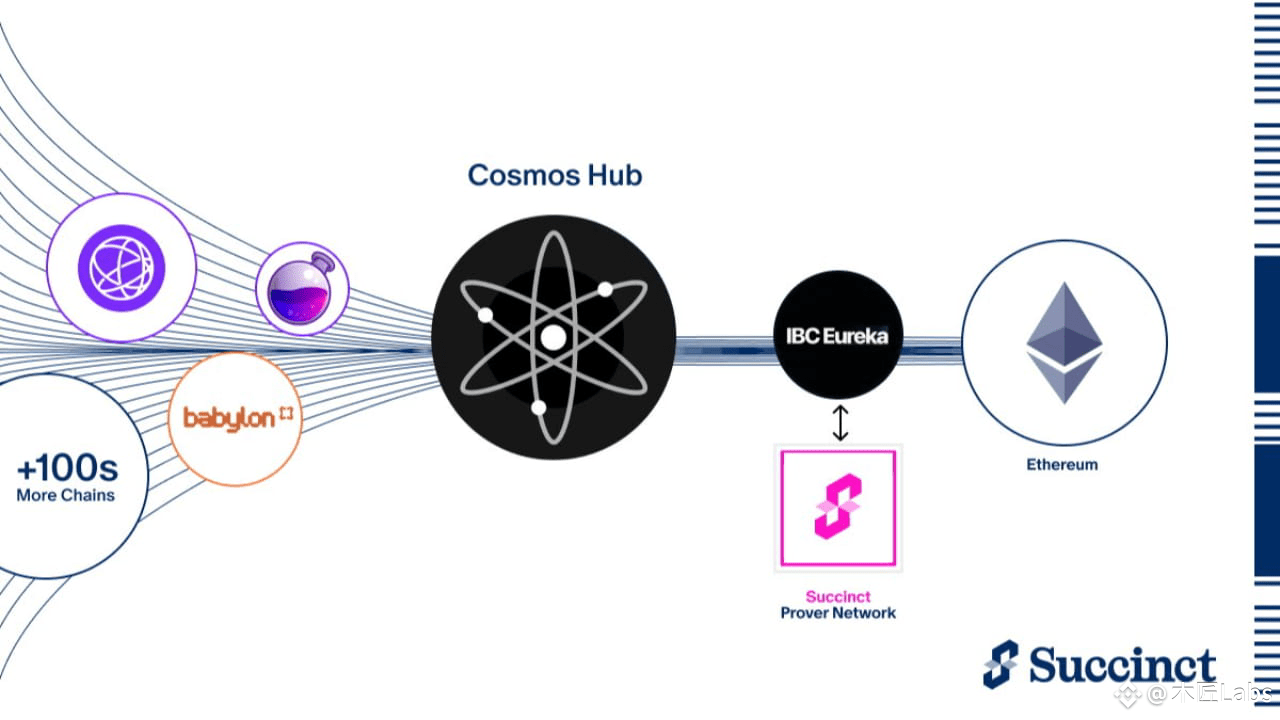
To understand how enterprise identity hubs operate at scale, it helps to visualize the architecture as a two-stage verification process. The system separates the heavy lifting of computation from the final settlement on the blockchain. This separation allows hubs like Polygon ID or Worldcoin to manage millions of users without clogging the main network or exposing sensitive personal data.
The process begins off-chain. When a user interacts with an identity hub—such as verifying their age for a service or checking Worldcoin’s proof of personhood—the hub collects the raw credentials. Instead of sending every individual transaction to the blockchain, the hub aggregates thousands of these interactions into a single batch. During this aggregation, the hub generates a succinct cryptographic proof, typically using zk-SNARKs or STARKs. This proof mathematically guarantees that the batch of transactions is valid without revealing the underlying data.
Once the proof is generated, it is submitted to the main chain as a single, compact entry. The Ethereum network (or the specific L1/L2 being used) does not need to re-execute every transaction. It simply verifies the cryptographic proof. If the proof is valid, the state of the identity hub is updated. This mechanism, known as a zk-rollup, enables hubs to process transactions at near-instant speeds while maintaining the security guarantees of the underlying blockchain.
This architecture is critical for enterprise adoption because it resolves the conflict between scalability and privacy. Legacy systems often require storing data on-chain to ensure auditability, which compromises user privacy. zk-rollups allow hubs to keep private data off-chain while still providing on-chain verification of compliance. For example, a corporate identity hub can verify that an employee holds a valid certificate without publishing the employee’s name or certificate ID to the public ledger.
The result is a system where the hub acts as a trusted aggregator, and the blockchain acts as a trust anchor. Users retain control over their credentials, and enterprises gain a scalable, privacy-preserving verification layer. This model supports high-throughput identity operations, making zero-knowledge technology viable for large-scale enterprise deployments in 2026 and beyond.
Enterprise adoption and compliance benefits
Enterprises are turning to zero-knowledge hubs because they solve a fundamental conflict in identity management: the need to verify data without hoarding it. Traditional databases require storing sensitive attributes like dates of birth or government IDs, creating massive liability if breached. ZK hubs shift this model. They act as aggregation and verification points where credential issuance happens off-chain, and on-chain verification confirms validity without exposing the underlying personal data.
Consider Polygon ID. It allows organizations to issue verifiable credentials that users hold in their wallets. When a company needs to confirm a user is over 18, the hub facilitates proof generation that answers "yes" or "no" without revealing the actual birthdate. This approach aligns perfectly with GDPR’s data minimization principle. Companies no longer need to store PII (Personally Identifiable Information) to process transactions, drastically reducing the attack surface for data breaches.
This architecture also simplifies compliance audits. Instead of proving that a database was secured against unauthorized access, enterprises can demonstrate that the cryptographic proofs were valid. Worldcoin and similar hubs provide the infrastructure for this trustless verification. By relying on on-chain verification, organizations can prove compliance with regulatory standards while maintaining user privacy, turning identity verification from a liability into a streamlined, secure process.
Common questions about ZK identity hubs
Enterprise architects often hesitate to adopt zero-knowledge (ZK) identity hubs due to concerns about computational overhead and integration friction. While the cryptographic primitives are mature, the practical implementation of aggregation and verification points introduces specific trade-offs that teams must navigate.
Performance bottlenecks are real. Generating a zk-SNARK proof is computationally expensive compared to standard digital signatures. This means that while on-chain verification is fast and cheap, the client-side or hub-side proof generation can become a latency bottleneck during peak load. Solutions like Polygon ID are optimizing this by offloading heavy lifting to specialized servers, but this adds architectural complexity.
Also, the "hub" itself becomes a point of centralization. While the proof is zero-knowledge, the hub manages the credential registry and revocation lists. This creates a dependency on the hub operator’s availability and security practices. Enterprises must carefully evaluate whether the privacy benefits outweigh the operational risk of relying on a centralized aggregation point.
No comments yet. Be the first to share your thoughts!